


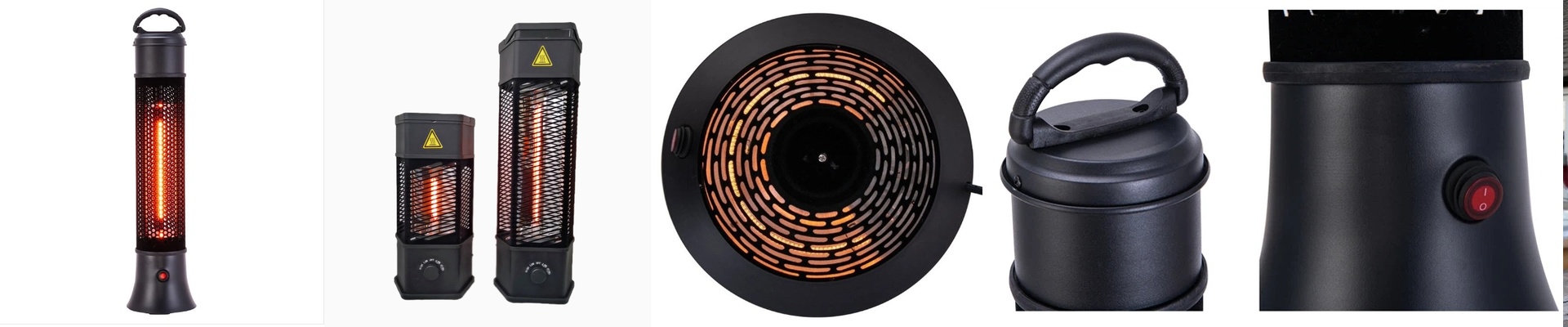


Making IP66 Infrared Heaters That Won’t Blind You
When you’re designing a heater for a bathroom or an outdoor spot, you’re basically playing a balancing act. You want it to get people warm fast, but you can’t have it acting like a spotlight. Especially in bathrooms, we have to think about the little ones. Babies have sensitive eyes, and the last thing you want is a heater that puts out a blinding glare while you’re trying to dry off a toddler.
The trick to saving your eyes
Most standard short-wave lamps are just… bright. Too bright. That harsh glare isn’t just annoying; it actually stresses out the retina. To fix this, we use special quartz glass or specific coatings. Think of it as a filter. It lets the heat—the part that actually makes you feel cozy—pass right through, but it kills off those aggressive blue-light peaks and that piercing white light. You still get the warmth. You just don’t get the headache.
Keeping the water out (and the heat managed)
An IP66 rating sounds technical, but it really just means the thing is dust-tight and can handle a heavy spray of water without shorting out. We use high-temp silicone gaskets and tempered glass to seal everything up. But here’s the tricky part: the seal can’t be too stiff. These lamps get incredibly hot, and materials expand when they heat up. If the seal is too rigid, it’ll just crack. Plus, we have to make sure the housing vents the heat away from the internal wiring. If that heat builds up inside, you’ll fry your insulation in no time.
The real-world trade-offs
Now, there’s a catch. Those eye-safe filters do block a tiny bit of the heat. You lose a small percentage of the raw power to get that softer, safer light. If you’re putting these in a breezy outdoor area, you might notice they don’t feel quite as punchy as a raw halogen tube. The fix is simple: just bump up the wattage or add another lamp to the mix. One last tip? Put them on their own dedicated circuit. These things pull a lot of power the second you flip the switch.