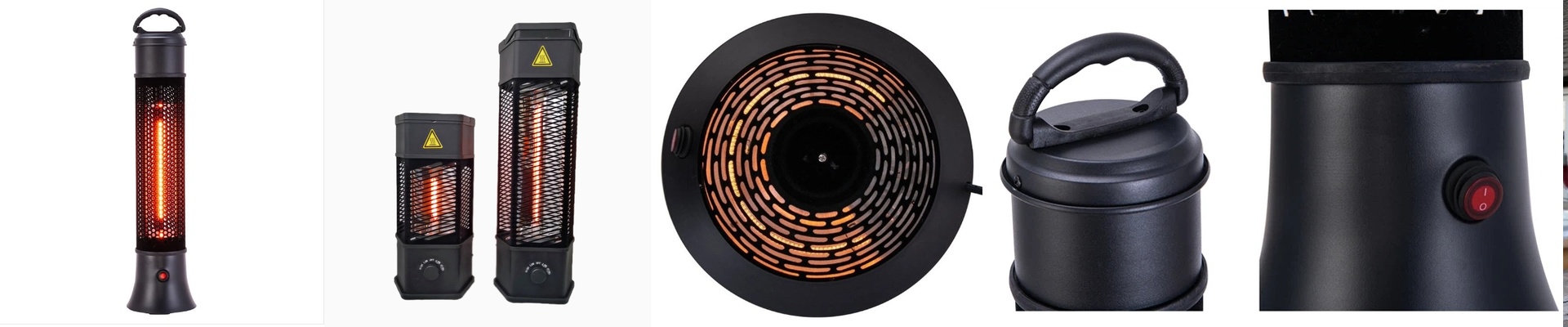


Why Your Waterproof IR Heaters Keep Dying (And How to Actually Fix It)
If you’ve ever had a waterproof infrared heater give up on you, you probably checked the heating element first. But here’s the secret: the element is rarely the problem. The real disaster usually happens at the lead-out wires. That tiny spot where the quartz tube meets the electrical wire? That’s the danger zone. If the sealing there is cheap, you’re basically inviting a failure. The slow burn of “Thermal Aging” Think about what happens when these heaters kick on. They get hot. Fast. The glass, the metal, and the sealant all expand at different rates. It’s like a tug-of-war happening at a microscopic level. Over time, this creates tiny cracks. You can’t see them, but moisture can. Once humidity sneaks into those gaps, the heat turns it into an oven for oxidation. The insulation gets brittle, it cracks, and then—pop—you’ve got a dead short. A quick dab of basic silicone just isn’t going to cut it if you’re working in a humid environment. Doing it the right way We don’t just “coat” the wires. That’s a surface-level fix. Instead, we use a vacuum impregnation process. Imagine forcing the sealant deep into every single microscopic pore of the interface. It creates a tight, airtight seal that actually stands up to the heat. We use high-temp epoxy resins and fluorosilicone that stay flexible even at 250°C. That way, when the heater cycles on and off, the seal doesn’t shrink or peel away. It just holds. One thing to keep in mind… Better sealing does add a little bit of thermal mass to the lead-out area. It won’t mess with your infrared output, but it does change how the wire sheds heat. Here’s the catch: your wiring harness needs to be as tough as the seal. If you use cheap wires, they’ll just burn out right where the sealed zone ends. It’s a bottleneck. To keep things reliable, stick with PTFE-coated or fiberglass leads. It’s a small detail, but it’s the difference between a heater that lasts a few months and one that lasts for years.