

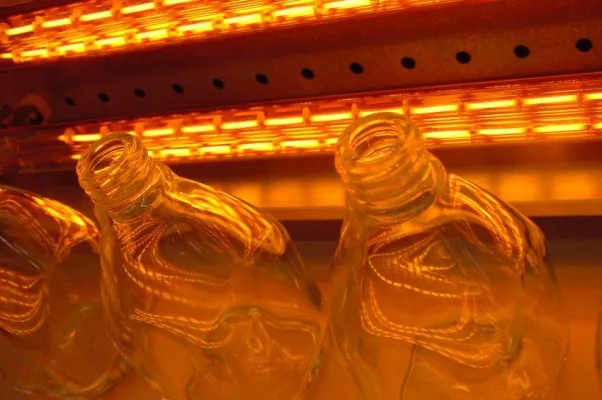
On the line, that safety glass cutting heater isn’t just warming the edge. It’s managing the thermal budget that decides whether the next sheet makes it through tempering and bending—or ends up in the scrap bin. When the heat is off, you get micro-cracks, edge chipping, and rejects that hit your margins. We built this unit to hit the numbers that actually matter in glass processing. What’s under the hood, technically Inside, it runs high-emissivity quartz heating elements in a short-wave profile. That gives fast response and tight control right at the glass surface. Typical setups are 230 V or 400 V, with power matched to the cutting line—often 6–12 kW per module—so the temperature climbs quickly without overshoot. The body is compact, designed to drop straight into standard cutting/pre-heat stations, and the hot zone is shielded for operator safety. Control comes through a standard industrial interface, with closed-loop feedback that holds the edge at setpoint within tight tolerance. The payoff is repeatable thermal input, edge to edge. Why it plays on tempering and bending lines On tempering and bending, time and temperature are two sides of the same coin. This heater gets the glass into the cutting and pre-heat window faster, trimming cycle time without compromising quality. Uniform heating lowers thermal stress, so you see fewer rejects from edge fracture during bending and tempering. Energy use stays in check because the ramp-up is fast and the holding is stable—no idle heat you’re paying for. And because the module fits common OEM footprints, you can swap it in with minimal line downtime. Here’s what to keep an eye on Installation is straightforward, but the heater needs to be aligned to the glass path and matched to the line’s voltage and control strategy. Keep the surface clean—coating residues and dust mess with emissivity and can create hot spots. Plan routine inspections of the quartz elements and terminals, especially in high-humidity or dusty plants. When it’s maintained, this heater delivers consistent edge quality shift after shift, and that keeps the line moving.