Fixing Those Pesky Cold Spots in Glass Annealing
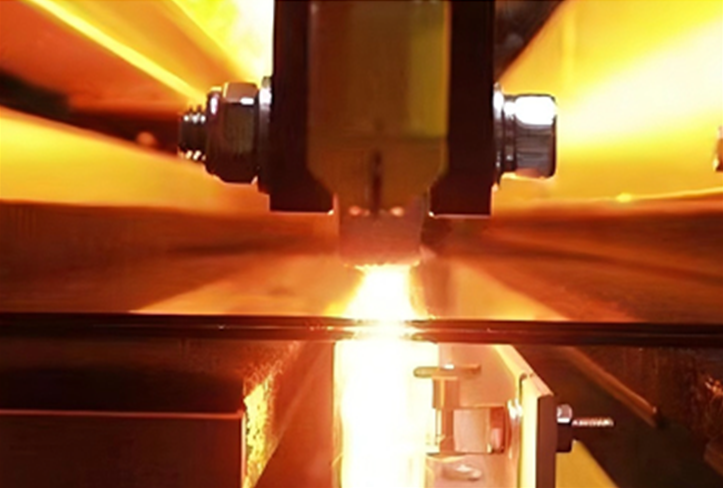
If you’ve ever worked with glassware that has weird shapes—think tight necks, handles, or those tapered bases—you know the headache of “dead zones.” You put the piece in a standard annealing lehr, but the heat just doesn’t get everywhere. The problem is that air is lazy. Convection heating struggles to push warm air into those tight radii and awkward corners. That’s where shortwave infrared (IR) lamps come in. Instead of relying on the air to carry the heat, IR radiation just shoots straight through and hits the glass directly. It doesn’t care about air gaps. It just works. Getting the heat where it actually needs to go To make sure every single inch of a complex piece is covered, you can’t just throw one lamp in and hope for the best. We set up IR arrays that basically wrap around the conveyor. Since IR travels in straight lines, we angle the lamps specifically to hit those recessed spots. If you miss a spot, you get internal stress. And we’ve all seen what happens then: the glass looks fine until it suddenly cracks for no apparent reason after it’s already cooled. Nobody wants that. Choosing the right gear (and the trade-offs) We usually go with quartz-halogen tubes. Why? Because they ramp up fast. When you’re trying to nail a precise stress-relief cycle, you need heat now, not in ten minutes. But here’s the catch. These things run hot. Really hot. If you go overboard with the wattage but forget to give the housing proper ventilation, you’re going to melt your mounting brackets or fry your connectors. It’s a balancing act. Keeping things running smooth We use standard industrial connectors so that when a tube eventually pops, you can just swap it out and get back to work. No one likes staring at a dead line for three hours. One quick tip: make sure your PID controllers are tuned for the speed of IR. If they’re too slow, you’ll overshoot your target temperature and end up with thermal shock. And for the love of everything, keep those quartz tubes clean. A little bit of dust or a smudge of oil might seem like nothing, but it creates hotspots that will kill your lamps way sooner than they should. Give them a wipe, and they’ll last.