

Stop Guessing with Your Glass Annealing
Nothing kills a production run faster than batch variance. You’ve been there: everything looks fine, but then you realize the thermal distribution shifted. If your IR lamps are off by even 5% or 10% in wattage, you get hot spots. Just like that, you’ve got internal stress and glass snapping during the cooling phase. It’s frustrating. We fix this by getting aggressive with the tolerances on our IR emitters. We make sure they’re tight, so the heat stays where it belongs.
The truth about thermal uniformity
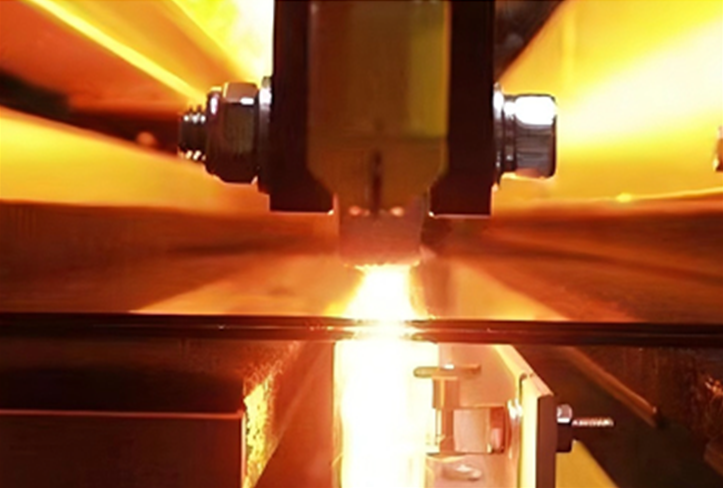
It all comes down to how the lamp behaves. For annealing, we lean on short-wave or medium-wave IR because it actually penetrates the glass instead of just sitting on the surface. But here’s the thing: when you wire up a whole bank of lamps, any little dip or spike in resistance across those tubes creates uneven heat zones. It’s like having a heater that only warms half the room. We spec our lamps to a very narrow wattage range. That way, every single square inch of your glass sheet gets the exact same hit of radiant flux.
Handling the heat and the load
Now, high-output lamps are great for a fast ramp-up, but they’re hungry. They put a real load on your power supply. You can’t just pop a high-wattage tube into a slot meant for a low-wattage one and hope for the best. Your transformers will let you know they’re unhappy. Plus, if you’re pushing for higher temps to shave time off your cycle, you’ve got to check your cooling fans. If the fans can’t handle the extra ambient heat around the housings, your sockets are going to melt. And nobody wants to deal with that.
Getting your quality back
When your IR output is consistent, the guesswork just vanishes. You can stop chasing that elusive “sweet spot” every time a new batch comes down the line. The thermal profile stays flat. The glass hits the annealing point uniformly, and you actually get a stable product. It means way less scrap in the bin. Better yet? You can stop messing with the conveyor speed or the timer settings every ten minutes. You just set it and let it run.