Why Fast-Response IR Lamps are a Lifesaver for Glass Inline Annealing
If you’ve ever worked with glass finishing, you know the struggle. You need to get rid of those internal stresses so the glass doesn’t crack, but you have to do it without warping the whole piece. It’s a delicate balance. The problem is that old-school resistive heaters are slow. They lag. We switched to shortwave infrared (SWIR) lamps because they hit the target temperature in seconds. Not minutes. Seconds. That speed is the only way to actually keep a continuous production line moving without everything grinding to a halt.
How the heat actually works
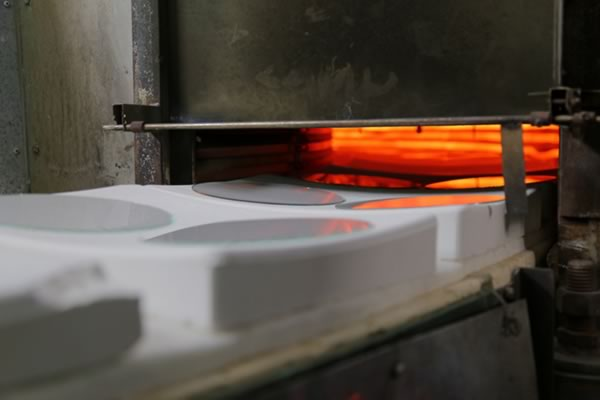
Here’s the thing: shortwave IR doesn’t just sit on the surface. It sinks deeper into the glass than the medium or longwave stuff does. We’ve designed these lamps to dump a huge amount of power directly into the workpiece. Since the filament heats up almost instantly, you can tweak the heat on the fly. If you decide to crank up the line speed, the lamps just keep up. You aren’t stuck waiting for some massive, heavy oven block to finally soak up enough heat to be useful.
Real-world specs for the shop floor
We use high-purity quartz for these tubes. Why? Because rapid cycling is brutal on equipment, and this stuff can handle the thermal shock without snapping. You’ll mostly see R7s or Sk15 connectors on our glass lamps. It’s not just about making them easy to plug in; it’s about keeping the connection rock-solid when your machinery is vibrating and shaking. Now, a heads-up on power. We spec these lamps at higher voltages to get the punch needed for thick glass. It works great for fast annealing, but it puts a serious load on your power supply. Just make sure your transformers and wiring are up to the task. If they aren’t, you’re going to burn out your sockets.
Keeping the line moving
When you stop relying on batch annealing, the whole vibe of the shop changes. You move from that annoying “stop-and-heat” rhythm to a smooth, continuous flow. Plus, the footprint is way smaller than those giant traditional lehrs. Since the heat goes straight into the glass rather than warming up all the air in the room, you stop wasting energy. It’s just a direct transfer of power. Simple as that.